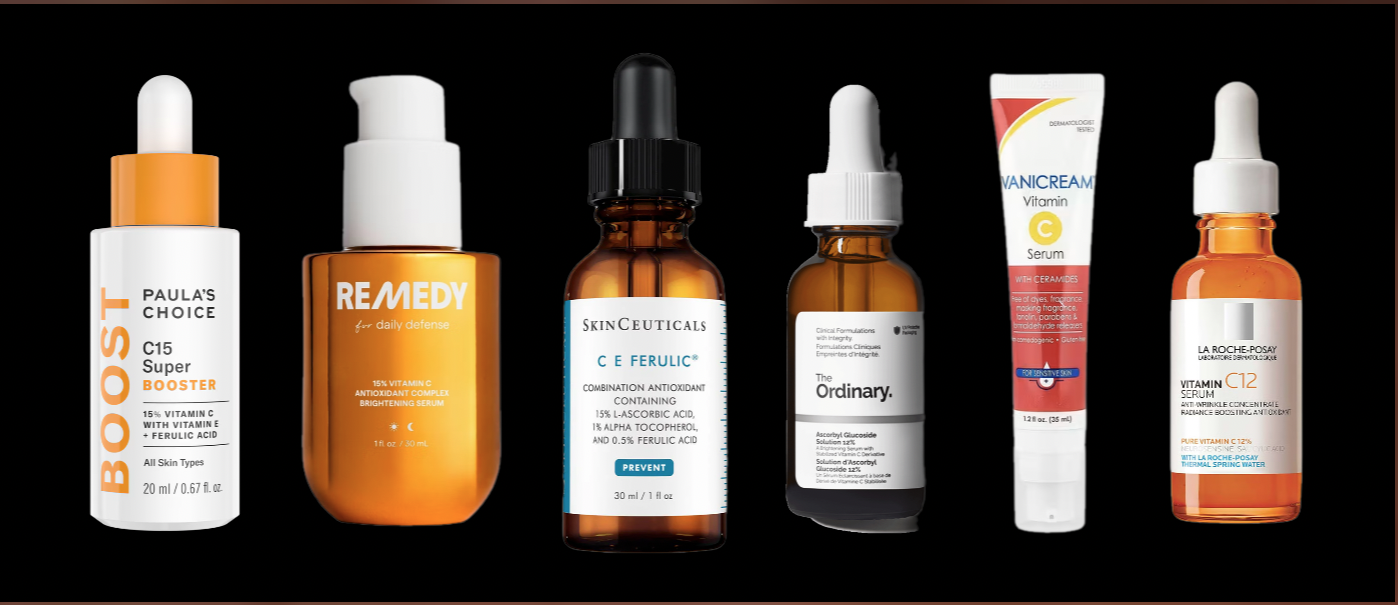
Vitamin C is probably one of the most recommended ingredients in skincare — and also one of the most misunderstood.
Everyone seems to know they “should” use it. Fewer people understand why, and even fewer know how to choose the right one.
As dermatologists, we keep coming back to vitamin C because it’s one of the rare ingredients backed by decades of research. But the truth is, not all vitamin C products work the same way — and understanding the differences can completely change your results.
Let’s walk through vitamin C the way I explain it to friends: straightforward, practical, and rooted in how skin actually behaves.
Why Vitamin C Deserves a Spot in Your Routine
Your skin is constantly exposed to environmental stress — sunlight, pollution, and normal metabolic processes all generate free radicals. These unstable molecules gradually break down collagen and elastin, which contributes to:
Wrinkles and fine lines
Loss of firmness
Uneven pigmentation
Dullness
Vitamin C is an antioxidant, meaning it neutralizes these damaging molecules before they accelerate aging.
If sunscreen is your first line of defense, vitamin C is your support system working behind the scenes.
Used consistently, vitamin C can help:
Support collagen production
Improve brightness and glow
Reduce dark spots over time
Strengthen protection against environmental stressors
Improve overall skin tone
The Part Most People Don’t Realize: Vitamin C Isn’t Just One Ingredient
“Vitamin C” on a label doesn’t mean much unless you know the specific form used.
Different versions vary dramatically in strength, stability, and irritation risk.
L-Ascorbic Acid — The Gold Standard
This is pure, active vitamin C and the most extensively studied form.
It delivers strong antioxidant protection and collagen-supporting benefits because it’s already biologically active when applied to the skin.
But it comes with challenges:
It works best at an acidic pH, which can feel irritating.
It’s extremely unstable.
Light, air, heat, and time can degrade it.
Most effective formulations fall between 8–20%. Higher percentages don’t necessarily mean better results.
If your skin tolerates L-ascorbic acid well, it remains one of the most powerful options available.
Tetrahexyldecyl Ascorbate (THD Ascorbate)
An oil-soluble form that behaves differently from traditional vitamin C.
Because it penetrates through the skin’s lipid layer and releases more slowly, it’s often better tolerated and less irritating. Many people with sensitive or acne-prone skin find this version easier to use.
Sodium Ascorbyl Phosphate (SAP)
A stabilized derivative that converts into active vitamin C once absorbed.
It’s gentler, more stable, and may even provide mild antibacterial benefits. The tradeoff is that results tend to be slower and less dramatic compared to pure L-ascorbic acid.
Magnesium Ascorbyl Phosphate (MAP)
Another stable, water-soluble option that works at a more skin-friendly pH. It’s often well tolerated but typically less potent.
Ethyl Ascorbic Acid
A modified form designed to balance stability and effectiveness. It penetrates well and carries a lower risk of irritation, though research is less extensive compared to traditional forms.
Ascorbyl Glucoside
A stabilized derivative bonded to glucose that slowly converts into active vitamin C.
It’s gentle, stable, and beginner-friendly — though results may take longer because of the gradual activation.
Why Vitamin C Sometimes Smells… Weird
Many people notice a metallic or slightly “hot dog water” scent when using vitamin C serums.
That smell isn’t necessarily a bad sign.
Vitamin C itself is odorless, but oxidation and stabilizing ingredients (like ferulic acid) can create that distinctive scent.
Brands usually make one of two choices:
Leave the natural smell intact.
Add fragrance to mask it — which can increase irritation risk for some users.
Stability Matters More Than Most People Realize
Vitamin C is notoriously unstable. Exposure to light, air, and heat can degrade the ingredient and reduce effectiveness.
Practical tips:
Store your serum in a cool, dark place.
Choose opaque or tinted bottles when possible.
Avoid leaving it on a sunny countertop.
Some people worry darker bottles aren’t filled completely because they can’t see inside — but the packaging is actually there to protect the ingredient.
The Insider Strategy for Choosing Vitamin C
Here’s the honest hierarchy:
The most effective forms are often the most irritating.
The most stable forms are often much less potent.
That’s why I usually suggest starting with L-ascorbic acid if your skin tolerates it. If you experience significant irritation, transitioning to a stabilized derivative is a smart next step.
Consistency matters more than chasing the strongest formula on paper.
How to Use Vitamin C Correctly
Apply in the morning on clean, dry skin.
Use a small amount — more isn’t better.
Follow with moisturizer.
Always apply sunscreen afterward.
Start a few times per week and increase frequency as tolerated.
How Long Until You See Results?
Some people notice increased glow within a couple of weeks, but meaningful improvements — especially for pigmentation or texture — typically appear after about 12 weeks of consistent use.
Vitamin C Products I Often Recommend (click for link)
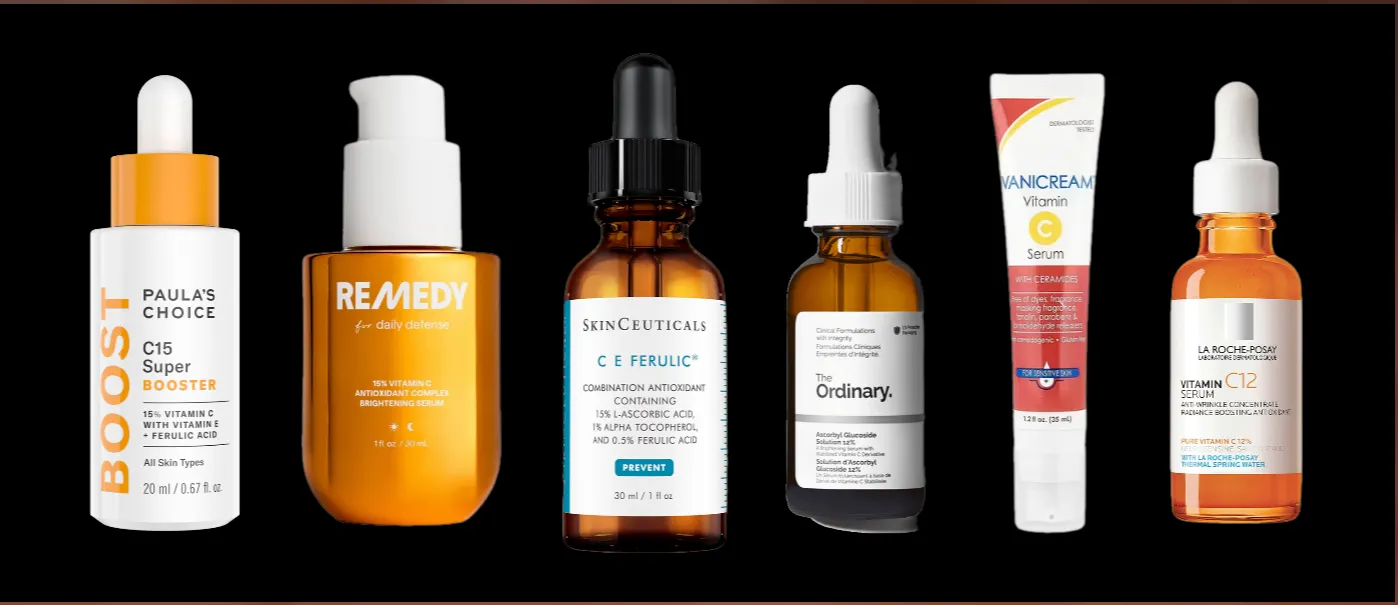
High-potency options (more effective but potentially irritating):
SkinCeuticals C E Ferulic (the gold standard)
Gentler options for sensitive skin:
Final Thoughts
Vitamin C isn’t just a trend — it’s one of the few ingredients with strong scientific backing and meaningful long-term benefits.
The key isn’t finding the strongest formula. It’s finding the one your skin tolerates well enough that you use it consistently.
Once you understand how stability, formulation, and different vitamin C types influence results, choosing the right product becomes much simpler — and your routine becomes much more intentional.